
“This isn’t the kind of story I usually tell…”
Most weeks, I’m writing about people, their journeys, their work, their heart. But today’s story is about someone who doesn’t speak at all, and yet somehow has been part of Littlefork’s voice for nearly fifty years.
He’s stood through blizzards, parades, county fairs, and generations of kids climbing onto his giant wooden chair for a photo. He’s watched Main Street evolve, watched families grow, and watched the town’s story continue to unfold around him.
He’s the one and only Jackpine Savage, and his story is bigger than anyone ever realized.
This is the story of three statues, the woodcarver who gave the Jackpine Savage his first breath, and a whole lot of Littlefork love.
🌲 1979: The Birth of a Legend
In August of 1979, the Littlefork Lions Club unveiled something the town had never seen before: a 14‑foot wooden lumberjack carved by the Woodbutchery of Big Falls, a chainsaw carving shop run by Hobart Reitan, Terry Boquist, and their crew.
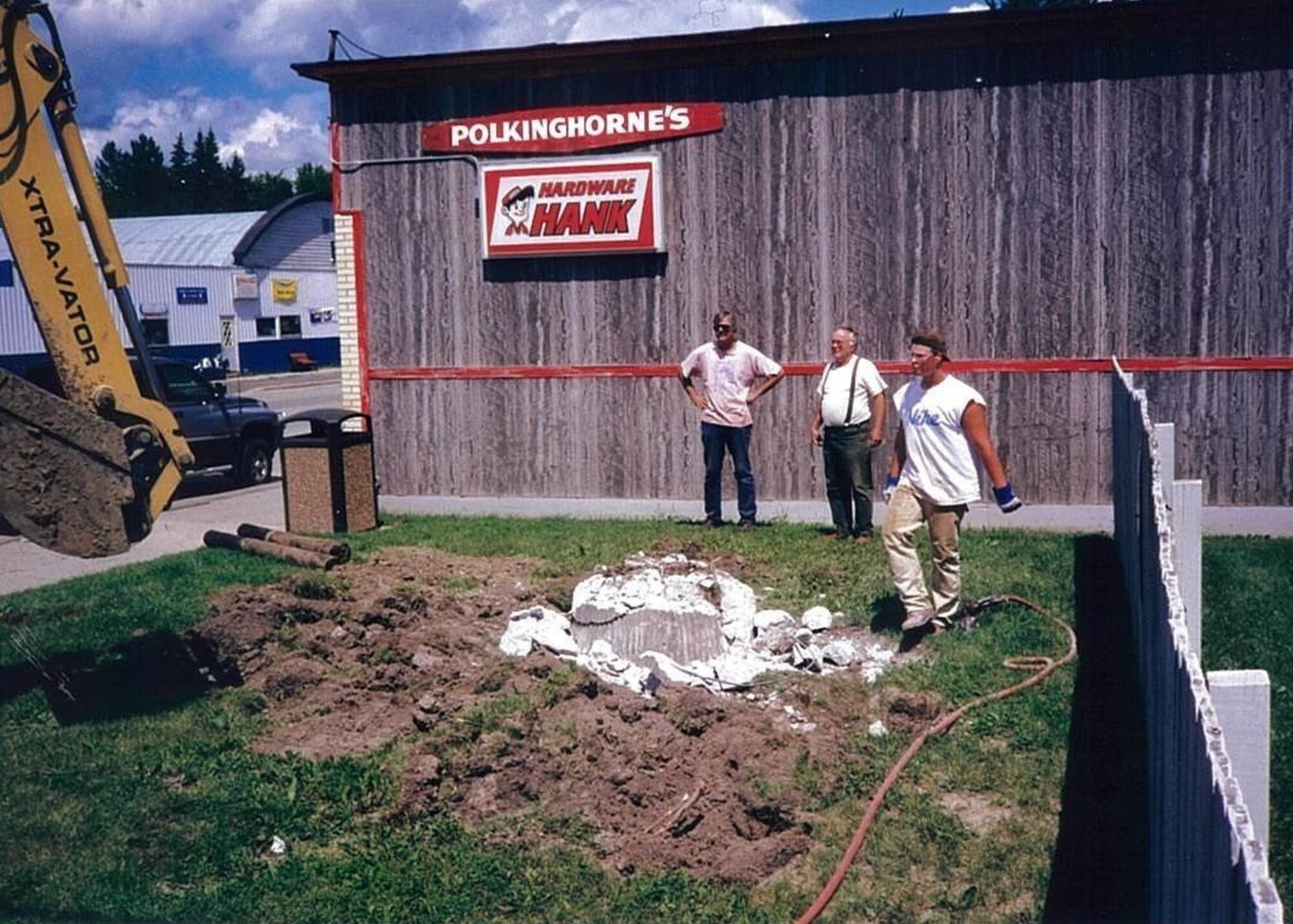
He was tall, rugged, and unmistakably Northwoods. He stood proudly at Polkinghorne’s Hardware Hank, axe in hand, watching over the town.
That same year, the Minneapolis Tribune featured the Woodbutchery, giving big‑city attention to the Big Falls carving shop behind the original Jackpine Savage. And right here at home, the Littlefork Times ran a photo of Senator Bob Lessard holding a miniature Jackpine Savage, a moment that captured just how excited the community was about its new landmark.
Littlefork fell in love instantly.
- Postcards were printed.
- Stories were told.
- Kids pointed at him from the backseat as their parents drove by.
He wasn’t just a statue. He was a piece of who we were.


🌲 What “Jackpine Savage” Really Means
Long before he became a statue, the Jackpine Savage was a nickname for the loggers who worked the jack pine forests of northern Minnesota. It wasn’t an insult. It was a badge of honor. These were the men who lived in rough camps, swung axes from dawn to dark, and carved a life out of the Northwoods with grit, humor, and a stubborn toughness that defined the early days of this region.
To be called a Jackpine Savage meant you were tough enough to work the jack pine country, skilled enough to survive the woods, stubborn enough to keep going when others wouldn’t, and proud enough to call this place home.
The statue wasn’t created to be a mascot. It was created to honor the people who built this town: the loggers, the laborers, the early families, and the generations who shaped Littlefork long before Main Street looked the way it does today.
And thanks to the hands of Terry Boquist, the man who carved the first two statues, that spirit was given a face, a stance, and a presence that has watched over Littlefork for nearly fifty years.
The Mini Statues: Two Littlefork Treasures
The Woodbutchery didn’t make a bunch of mini Jackpine Savages, just two that we know of.
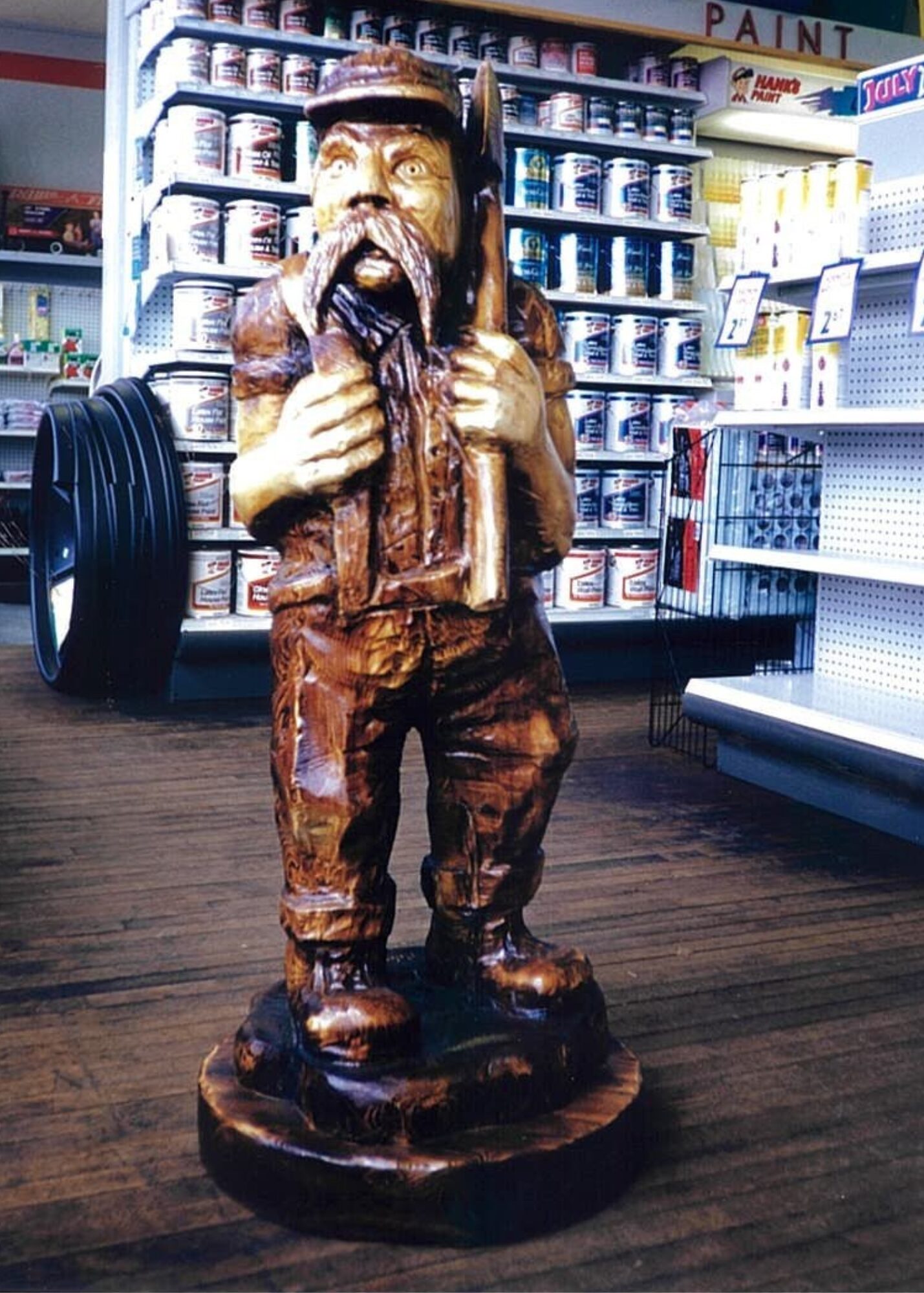
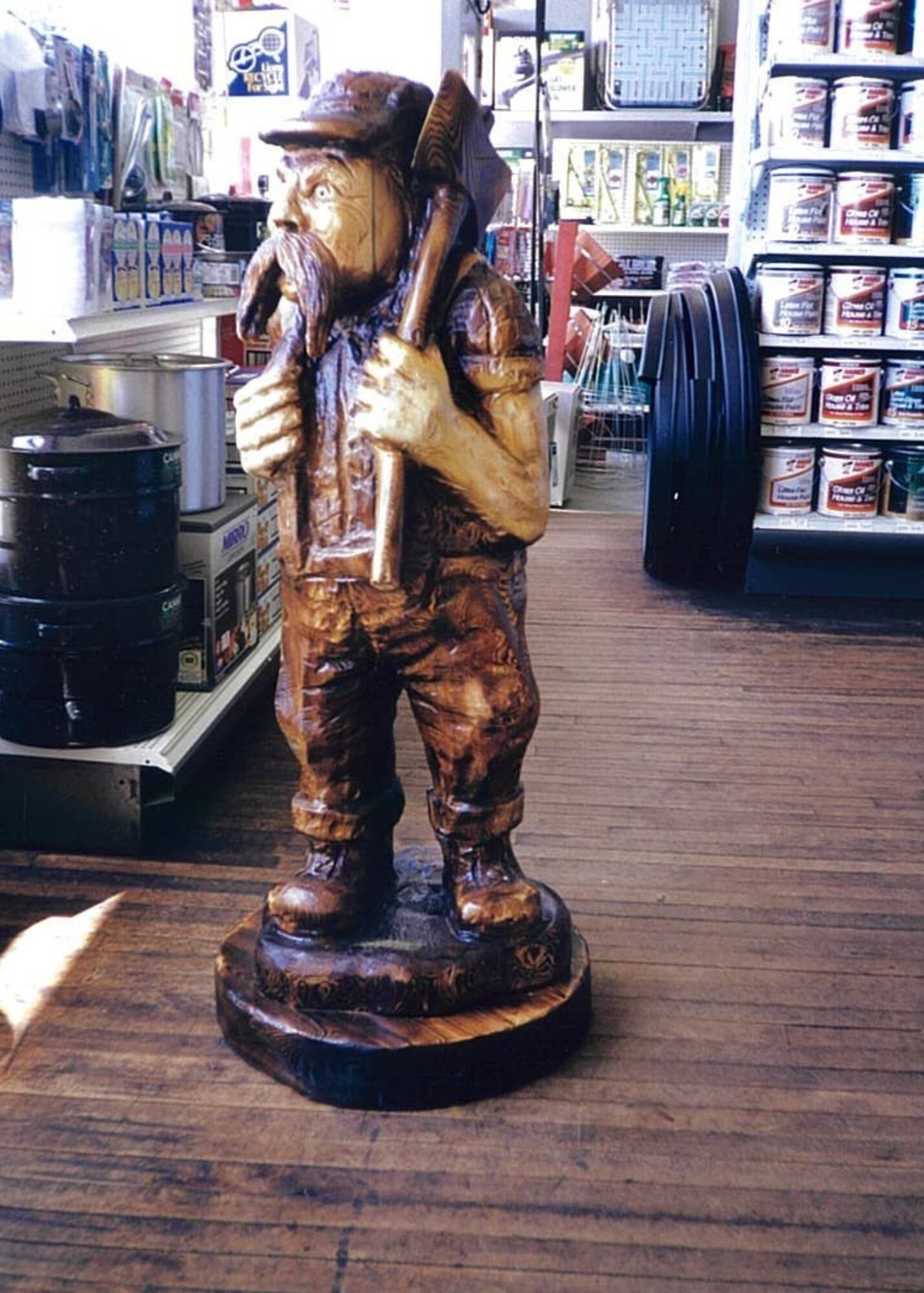
The first was carved in 1979, the same year the original statue went up. That one went to Senator Bob Lessard, who proudly posed with it in the Littlefork Times photo that’s now part of local history.
The second miniature wasn’t created until 1999, twenty years later, when the Lions Club commissioned the replacement statue. As part of that project, the Boquists carved a brand‑new mini Savage, and that’s the one that ended up in the hands of Bernie Ziemba.
Bernie had his heart set on that 1999 miniature from the moment he saw it. He bought a book of raffle tickets, then went back and bought about $150 more tickets because, as he kept telling Paulette, he just had to win it. And if you know Bernie, you get it. The man has built half the picnic tables in town with his own hands. A hand‑carved Jackpine Savage wasn’t just a keepsake, it was something made by a fellow craftsman. And after all that determination, the winning ticket ended up being in the very first book he bought. Paulette still laughs about that twist of fate.
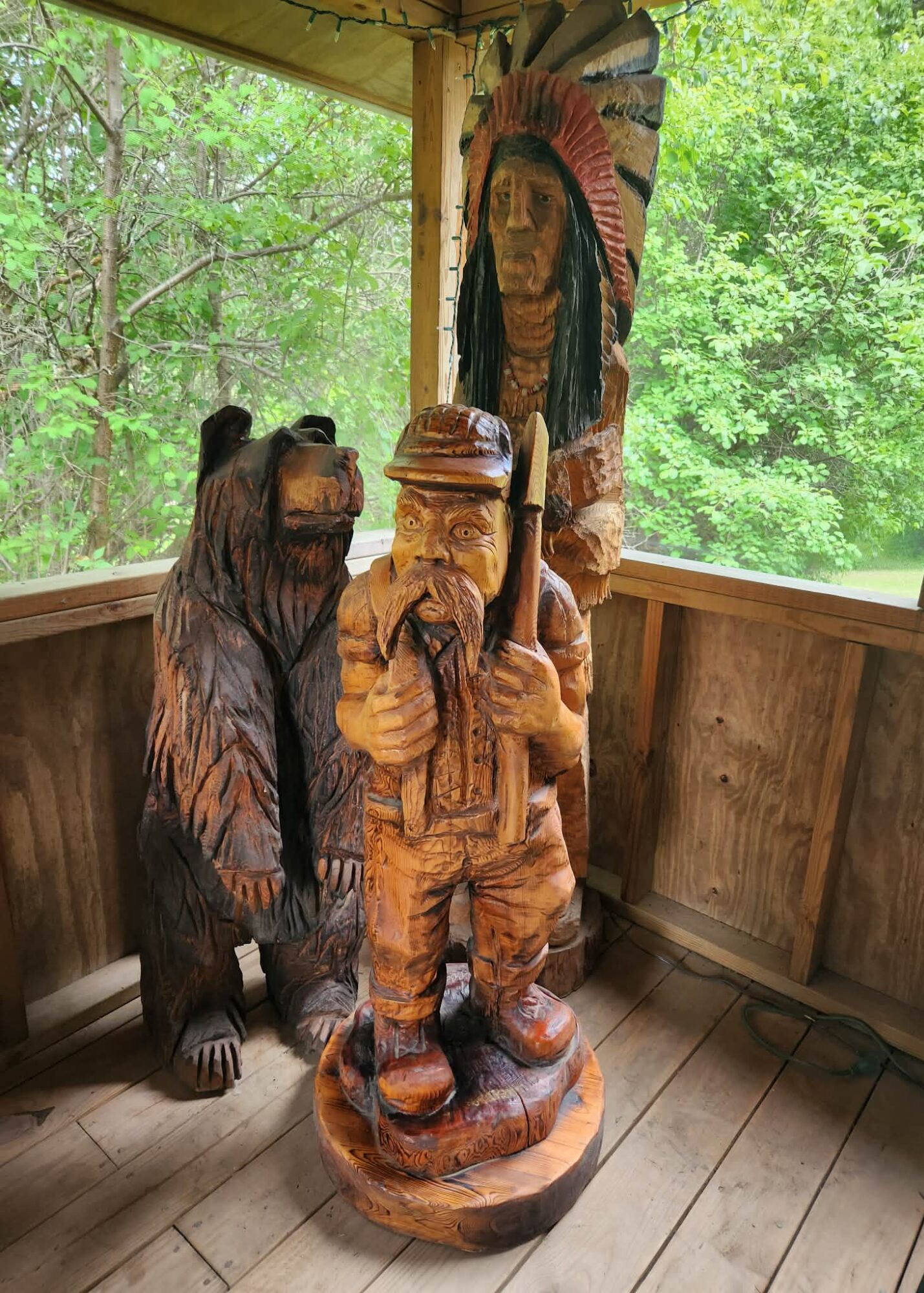
The grandkids were scared of the statue at first, so instead of the living room, the mini Savage found his home on the Ziembas’ covered porch, a spot chosen with care, where he’s been protected and preserved ever since. Out there he eventually gained two carved friends, a bear and a Native American figure, turning the porch into a little gallery of Northwoods character.
Today, Bernie’s mini Savage is still standing tall, beautifully preserved, one of only two known originals in existence.
🪓 1999: The Second Jackpine Savage
By the late 90s, the original statue had weathered twenty Minnesota winters. The Lions Club decided it was time for a replacement, and they went back to the same artistic lineage.
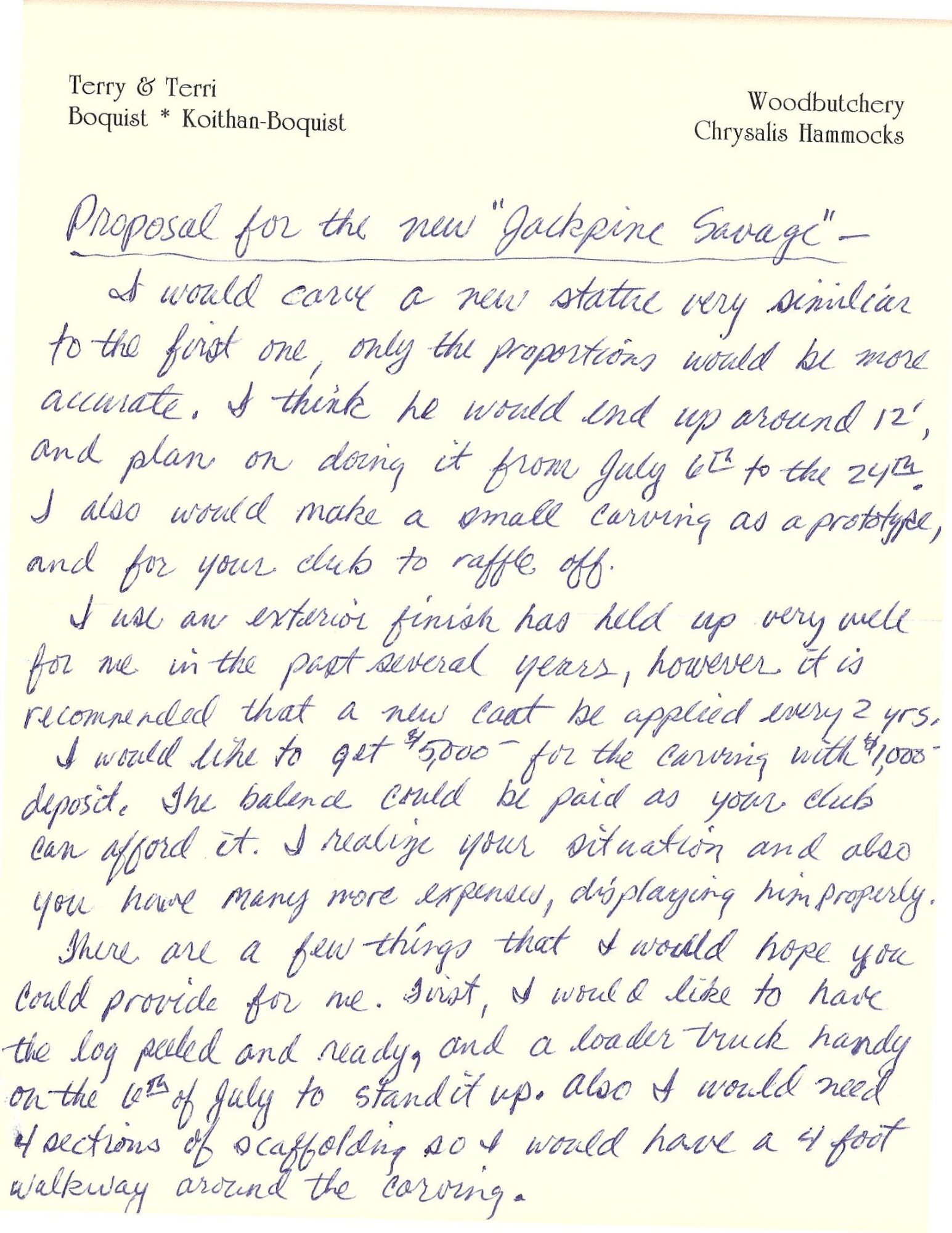
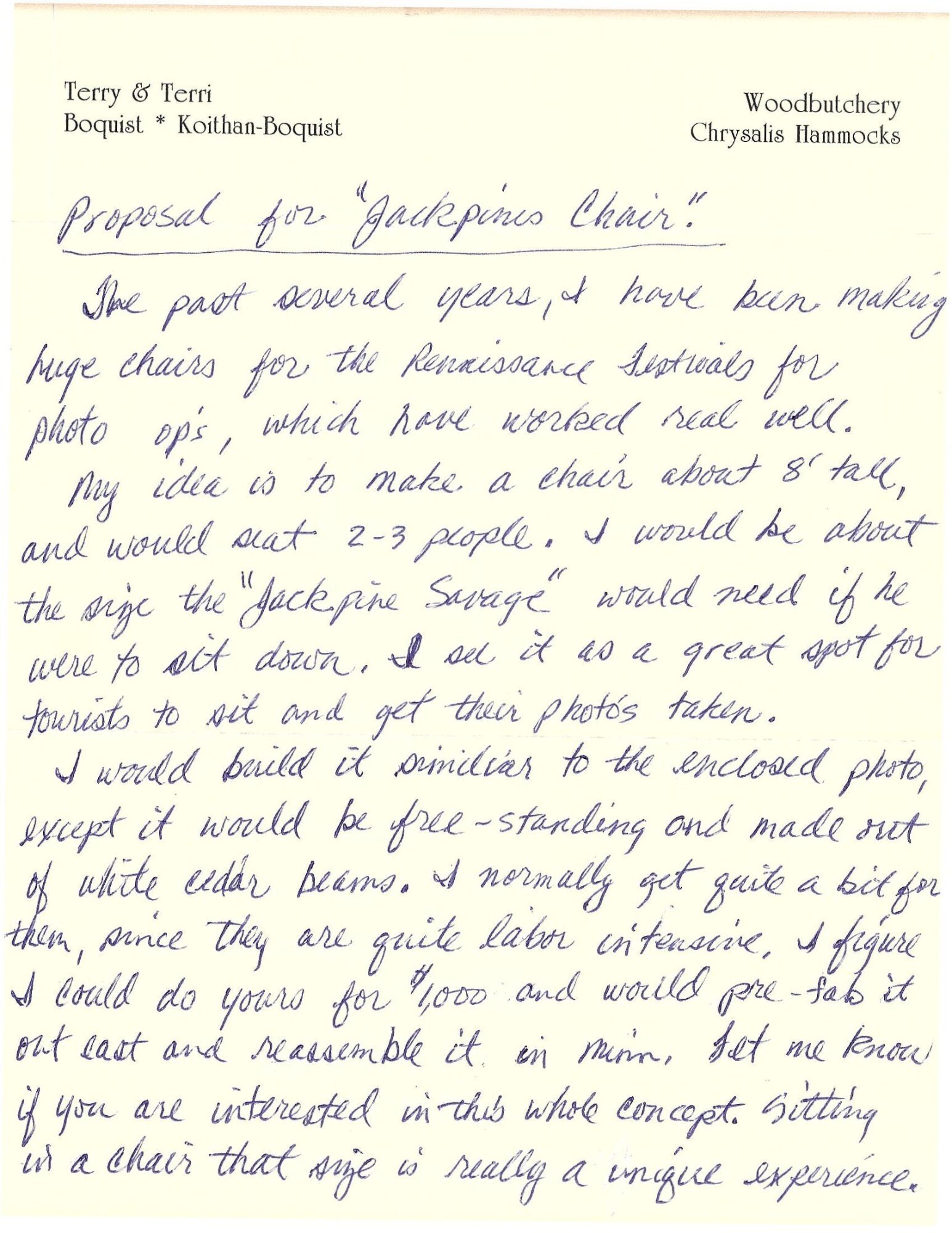
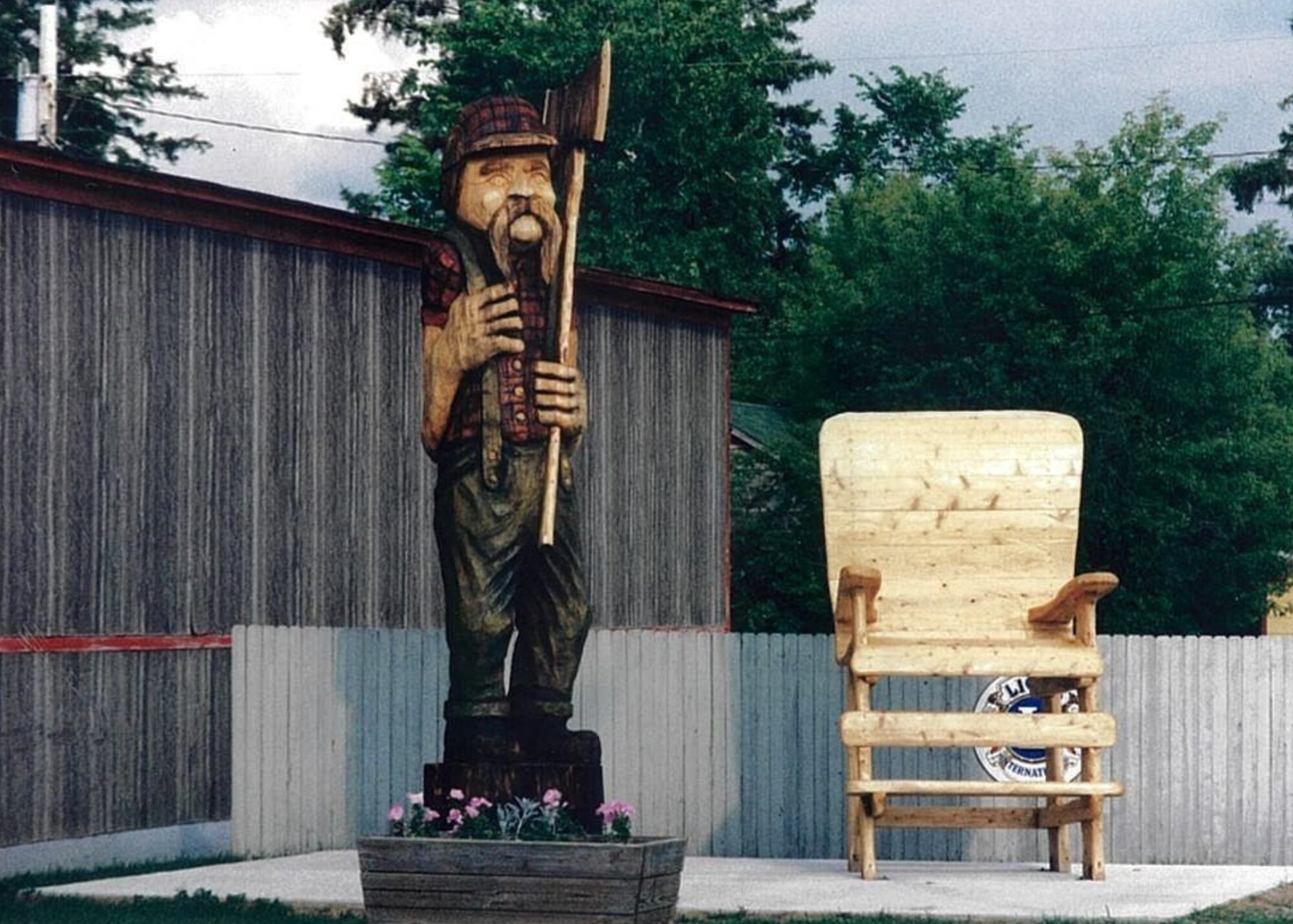
Terry and Terri Boquist submitted handwritten proposals to carve a new Jackpine Savage and build a massive wooden chair for photo ops. Their notes included a 12‑foot statue, a small prototype carving for a raffle, a 5,000‑dollar carving cost, a 1,000‑dollar deposit, requests for scaffolding, a loader truck, and a place to stay, and a separate 1,000‑dollar proposal for the giant chair.
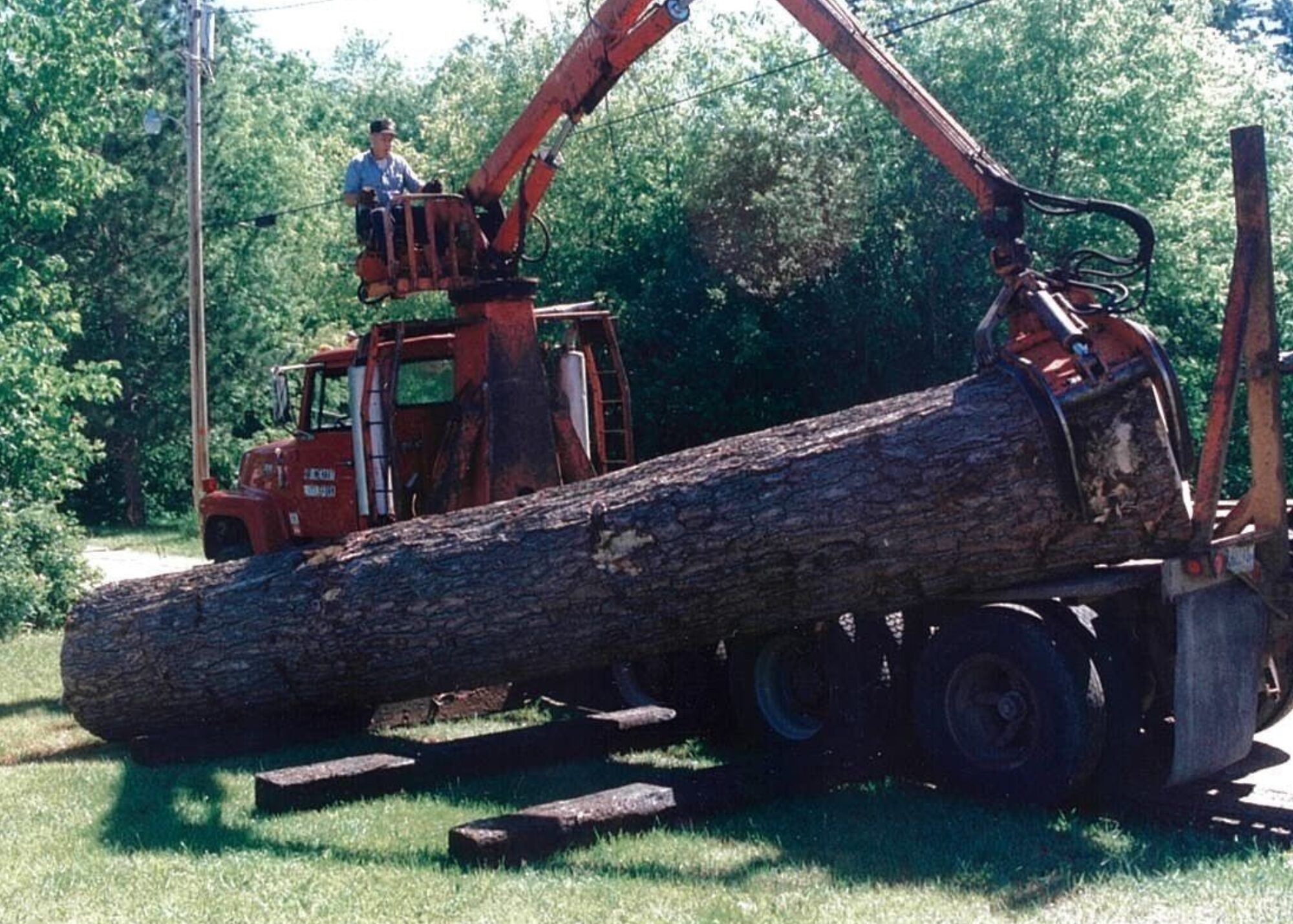
The log arrived on a truck, a monster of a tree trunk that looked like it had been growing since before Minnesota was a state.
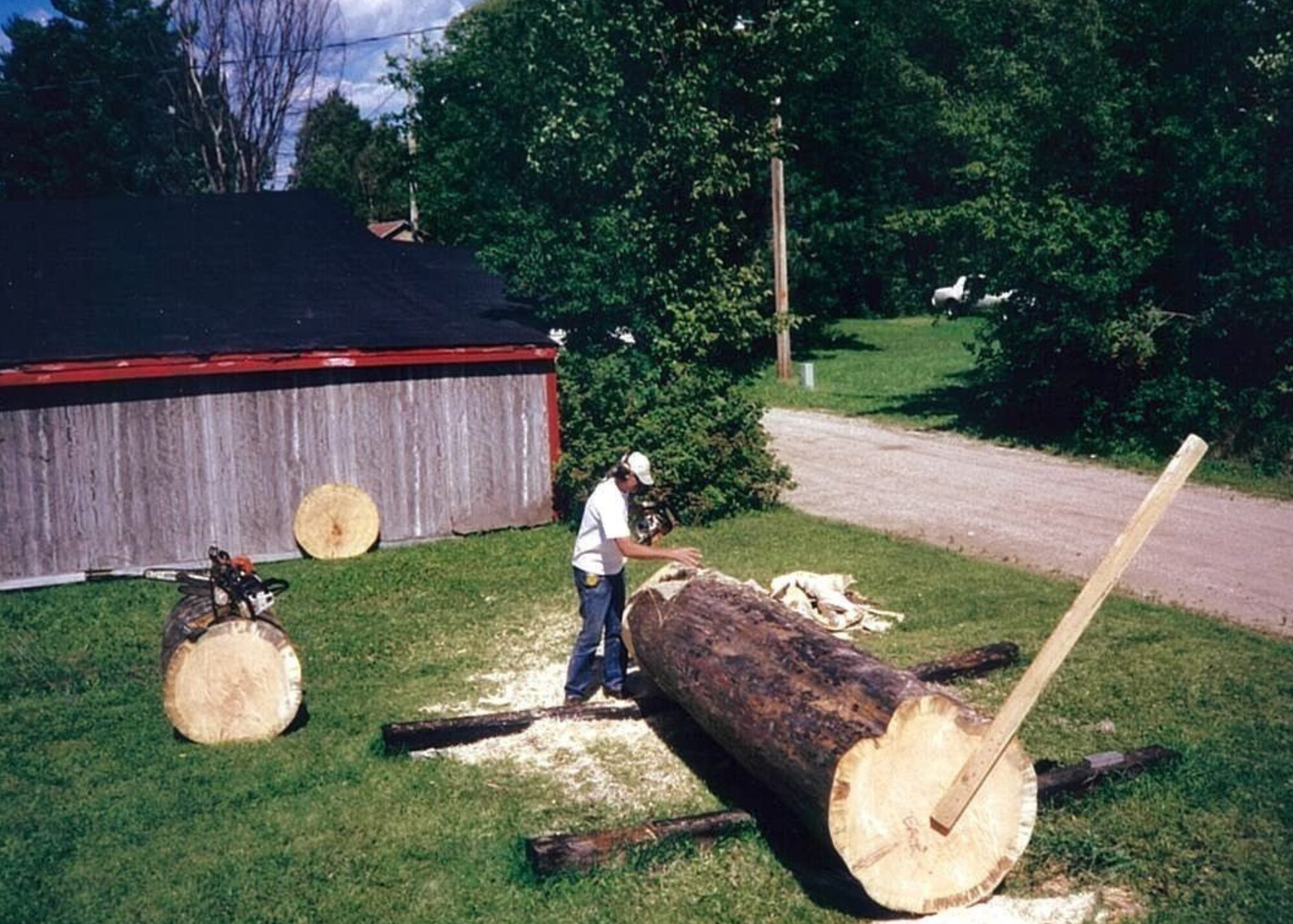
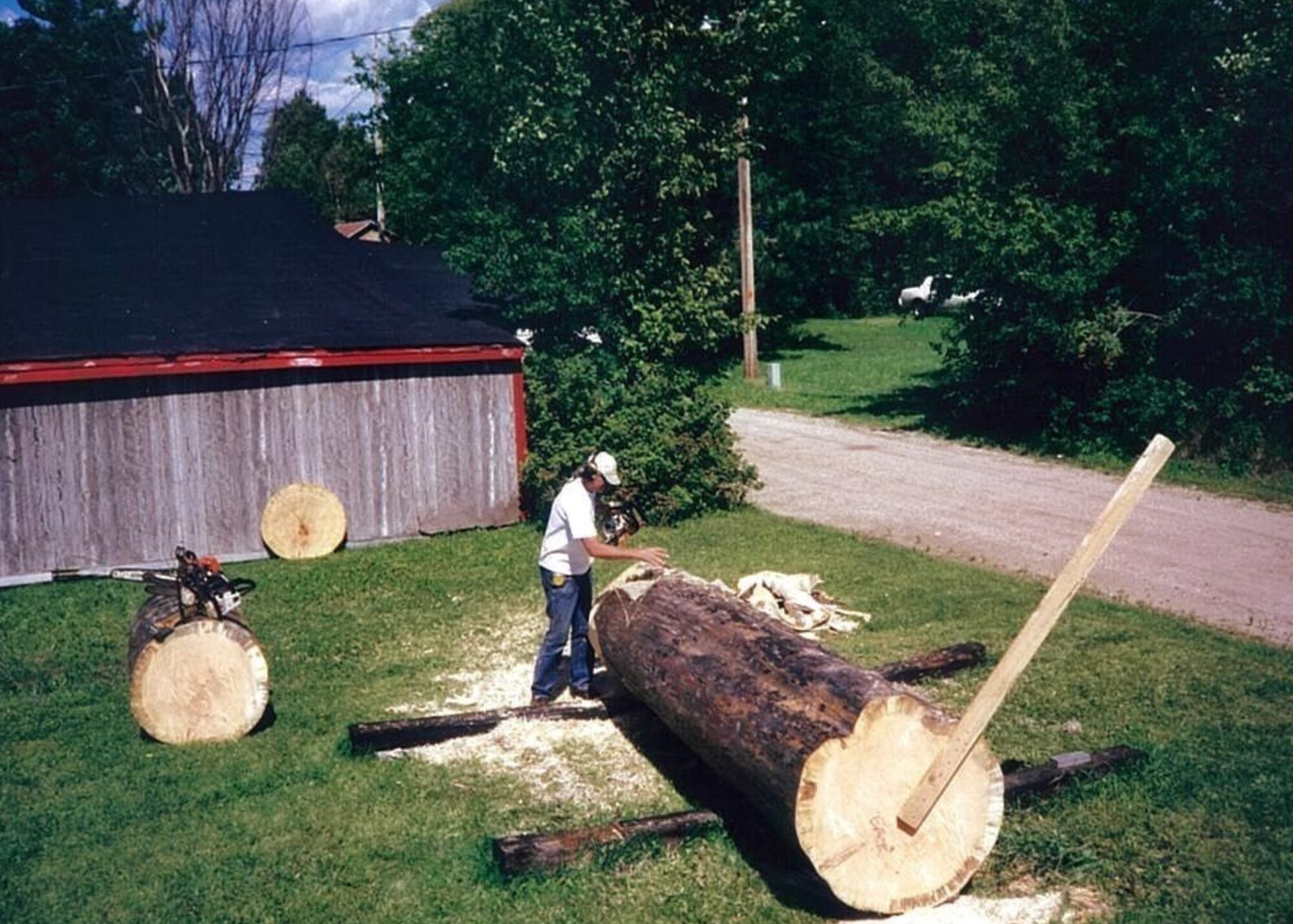
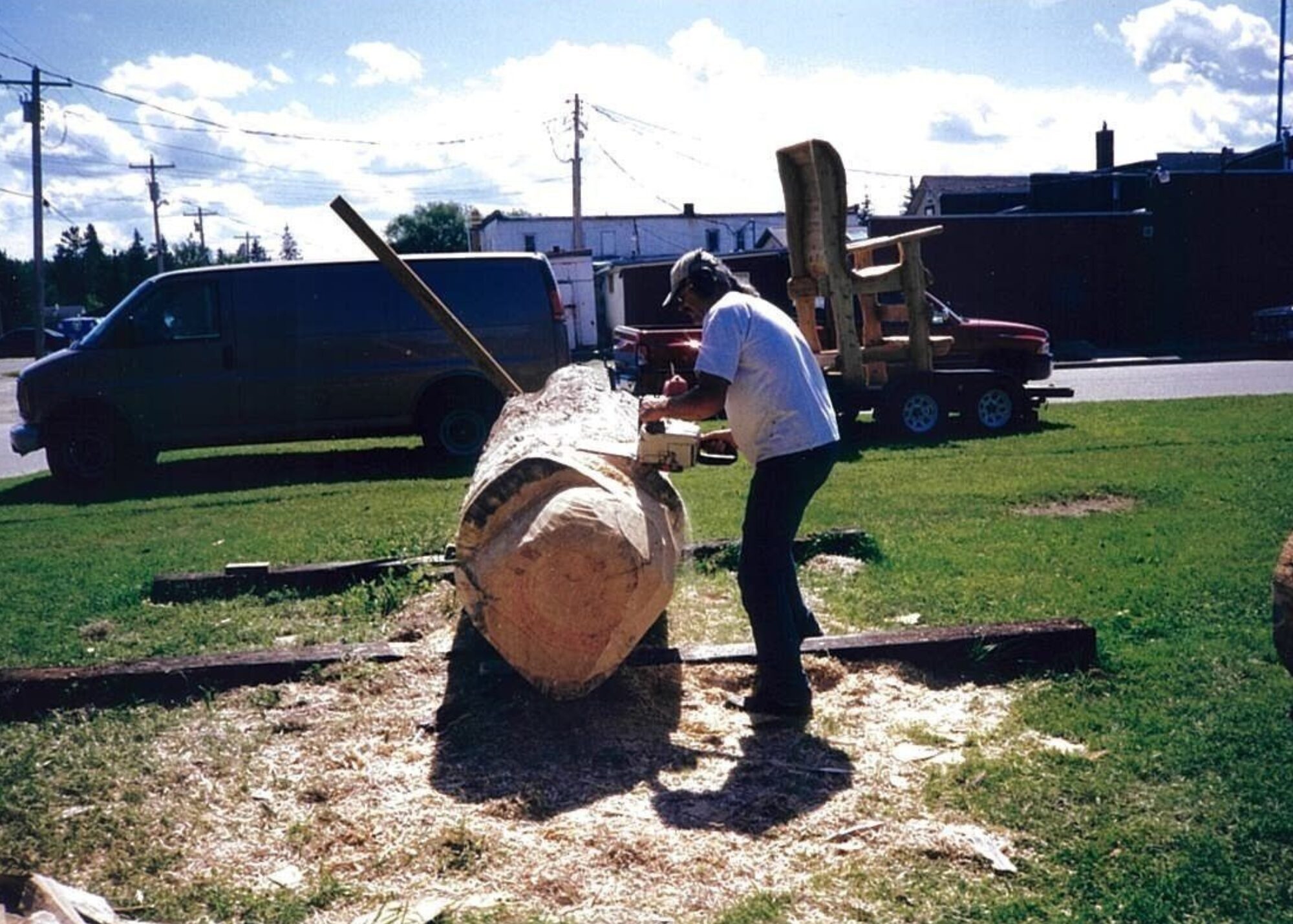
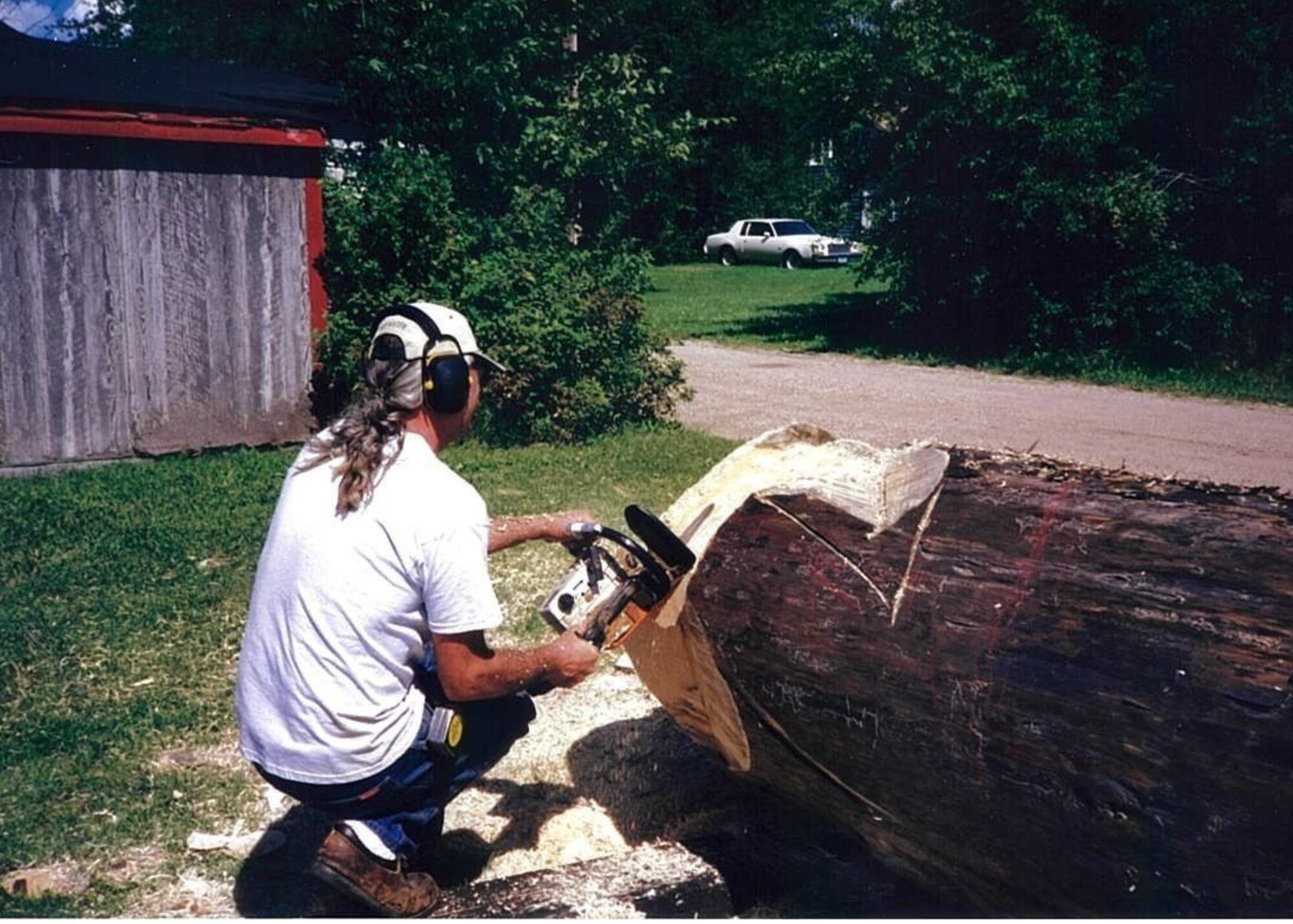
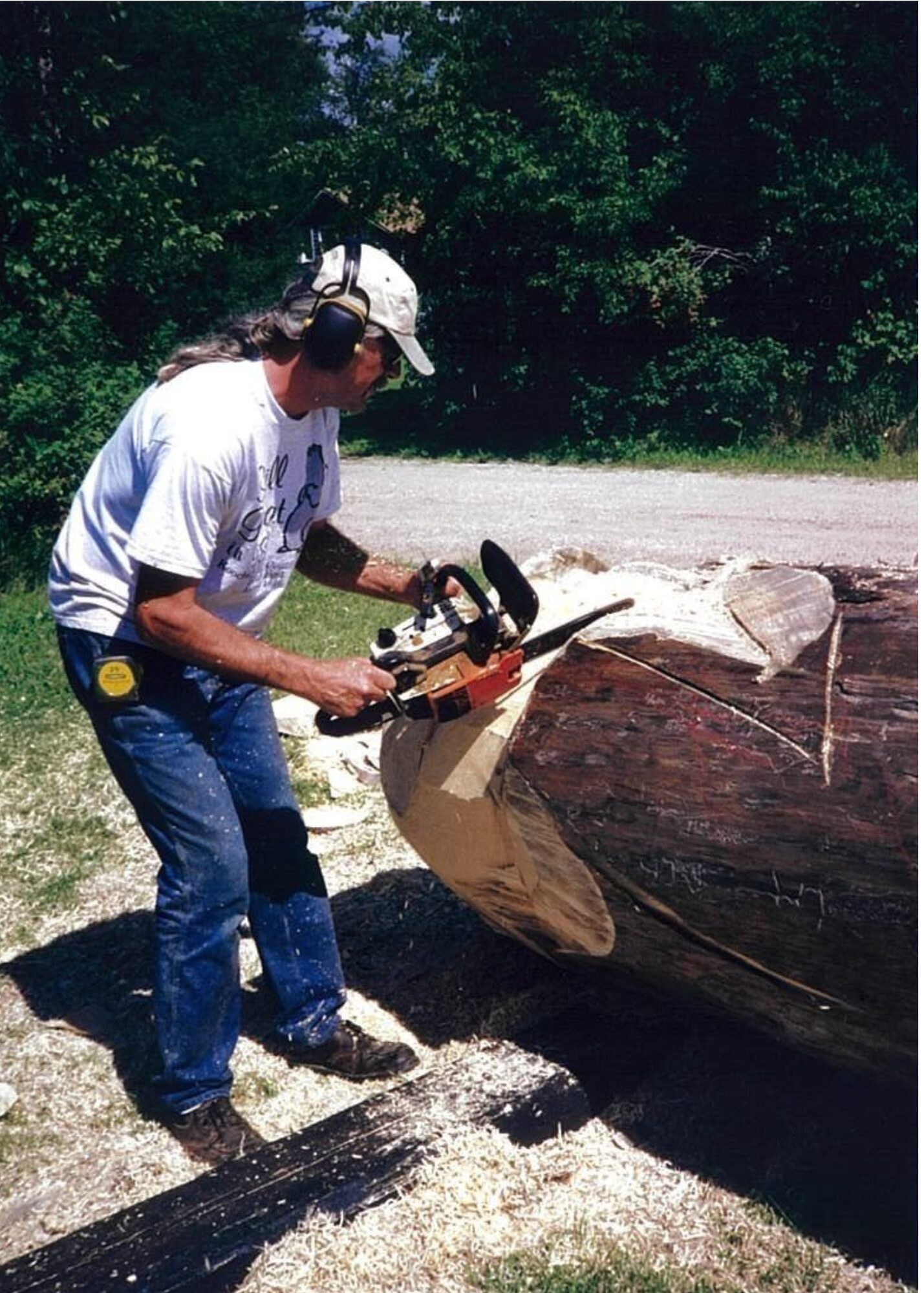
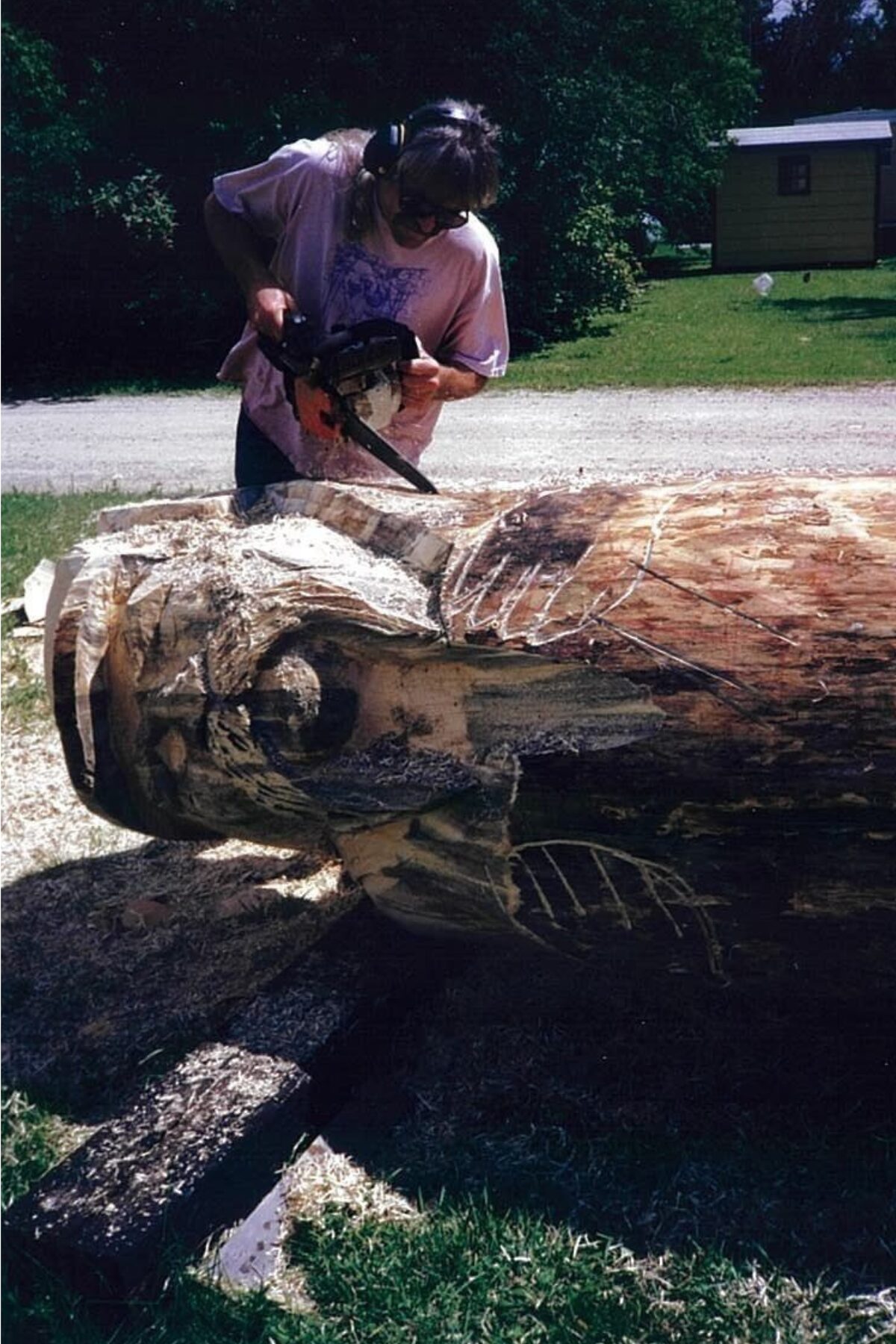
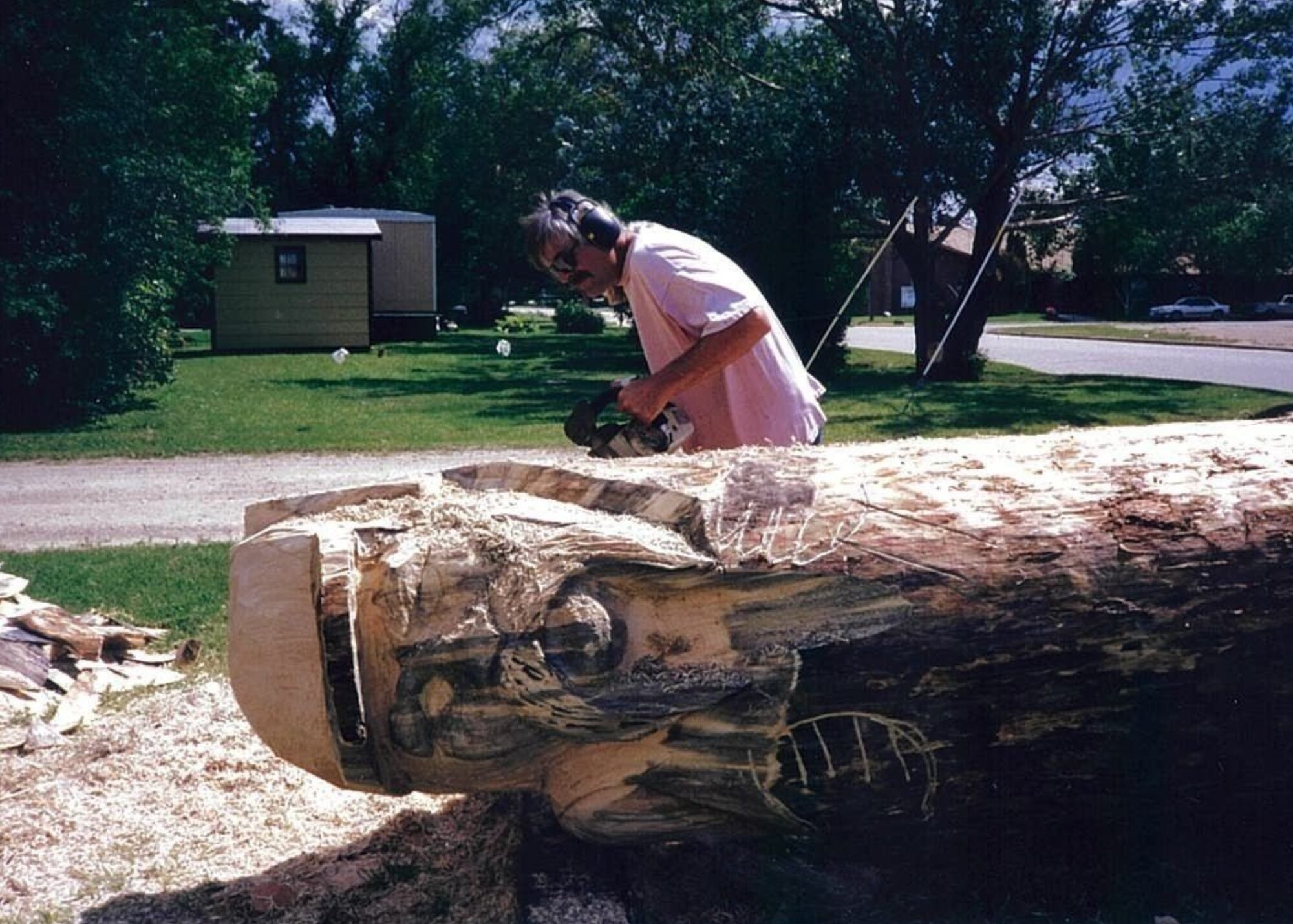
Photos show Terry carving the statue right here in Littlefork: blocking out the shape, forming the face, using multiple chainsaws, sawdust everywhere, and the giant chair sitting nearby waiting for its debut.
A new concrete slab was poured beside Polkinghorne’s, and the second Jackpine Savage, plaid shirt, axe in hand, standing next to his oversized chair, became the new face of Littlefork.
For many of us, this is the Jackpine Savage we grew up with.







🪚 A Note About the Carver
The Jackpine Savage has had many caretakers over the years, but only one man helped bring him to life twice. Terry Allan Boquist was part of the Woodbutchery carving team that created the original 1979 Jackpine Savage, the statue that first stood proudly outside Polkinghorne’s and became an instant Littlefork icon.
Twenty years later, Terry returned to Littlefork to carve the second Jackpine Savage himself. He shaped the face, stance, and personality of the version so many of us grew up with, carving it right here in town while people stopped by to watch the progress. His hands quite literally shaped two generations of the statue that became part of our identity.
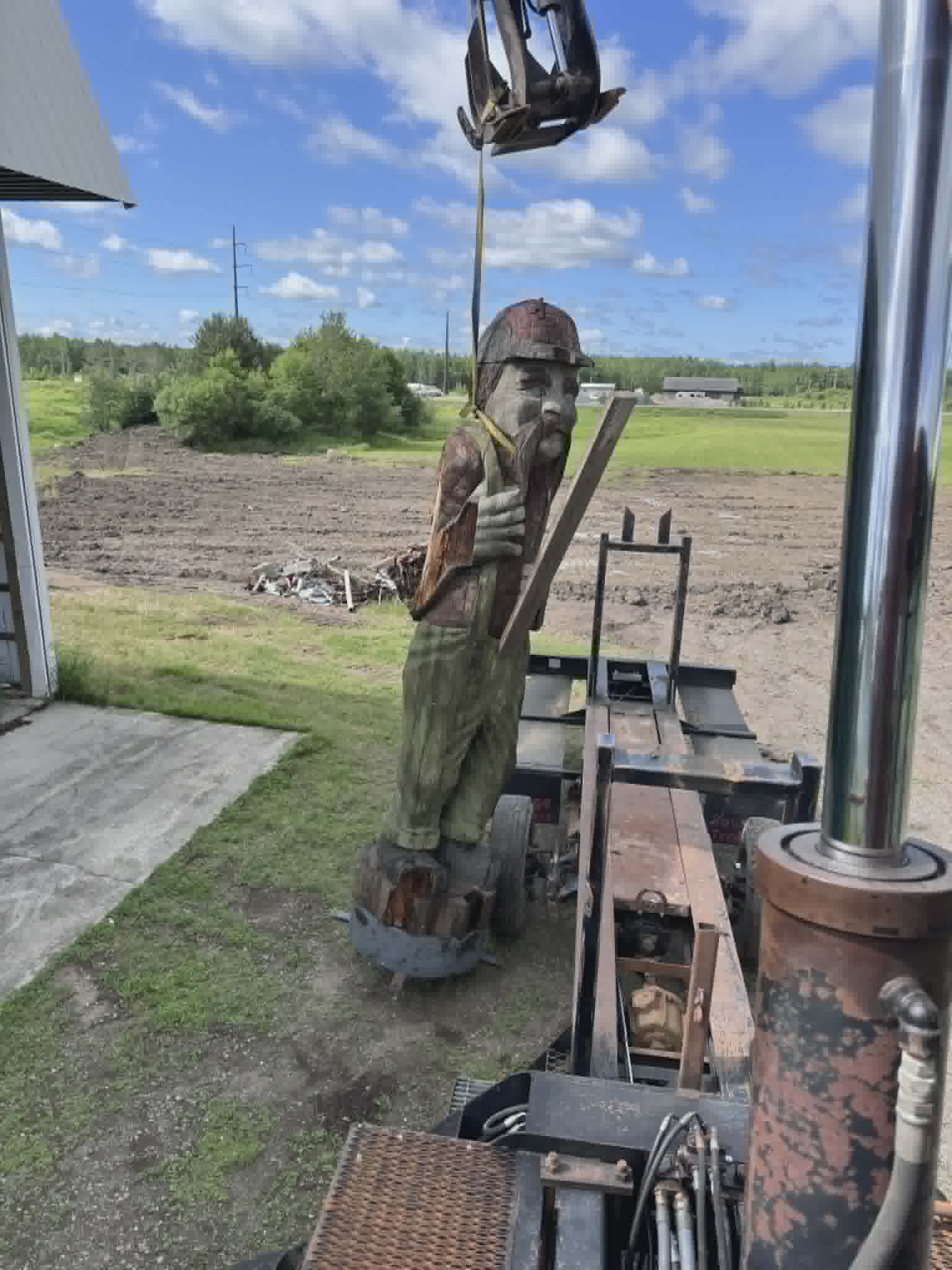
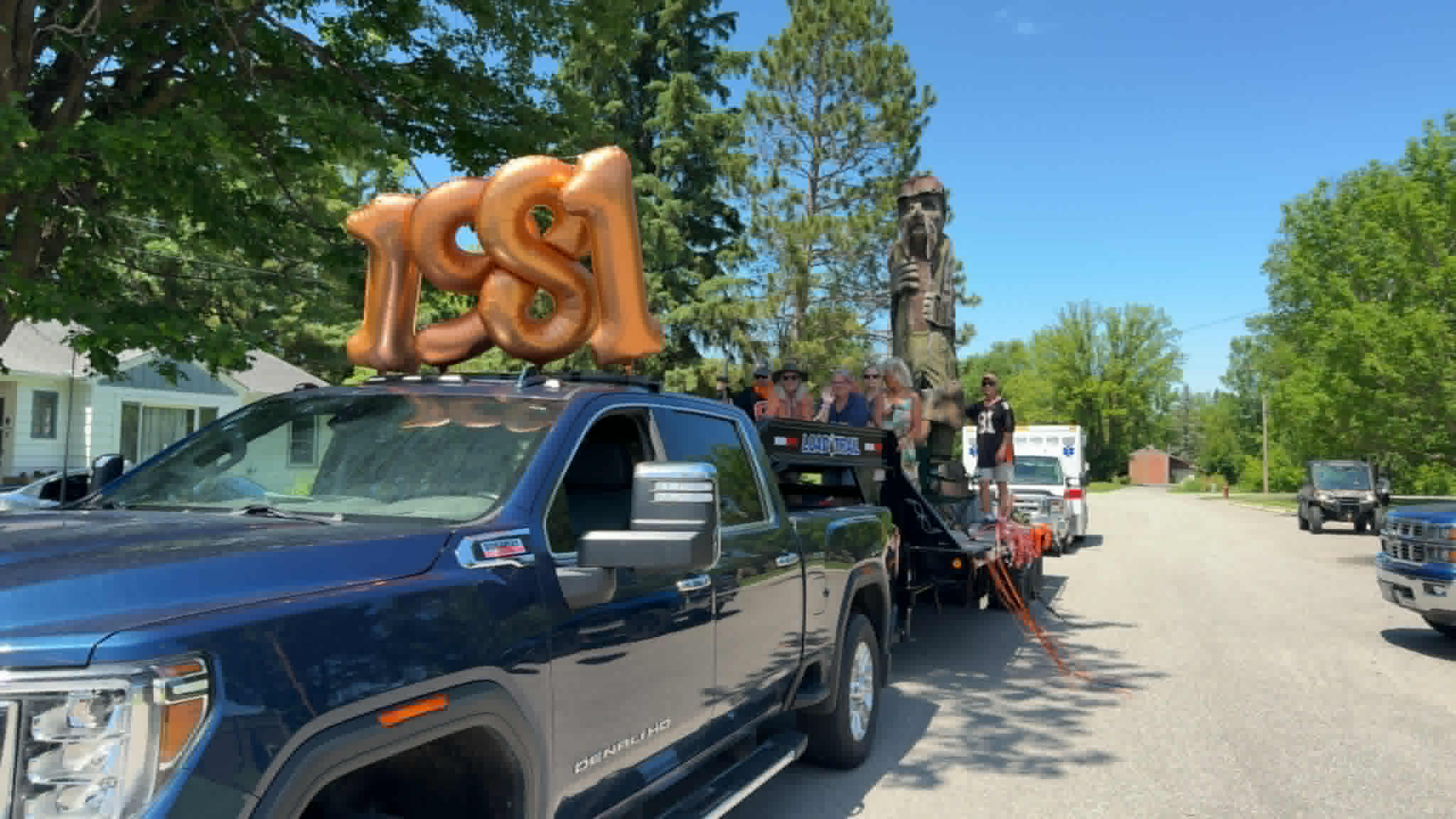
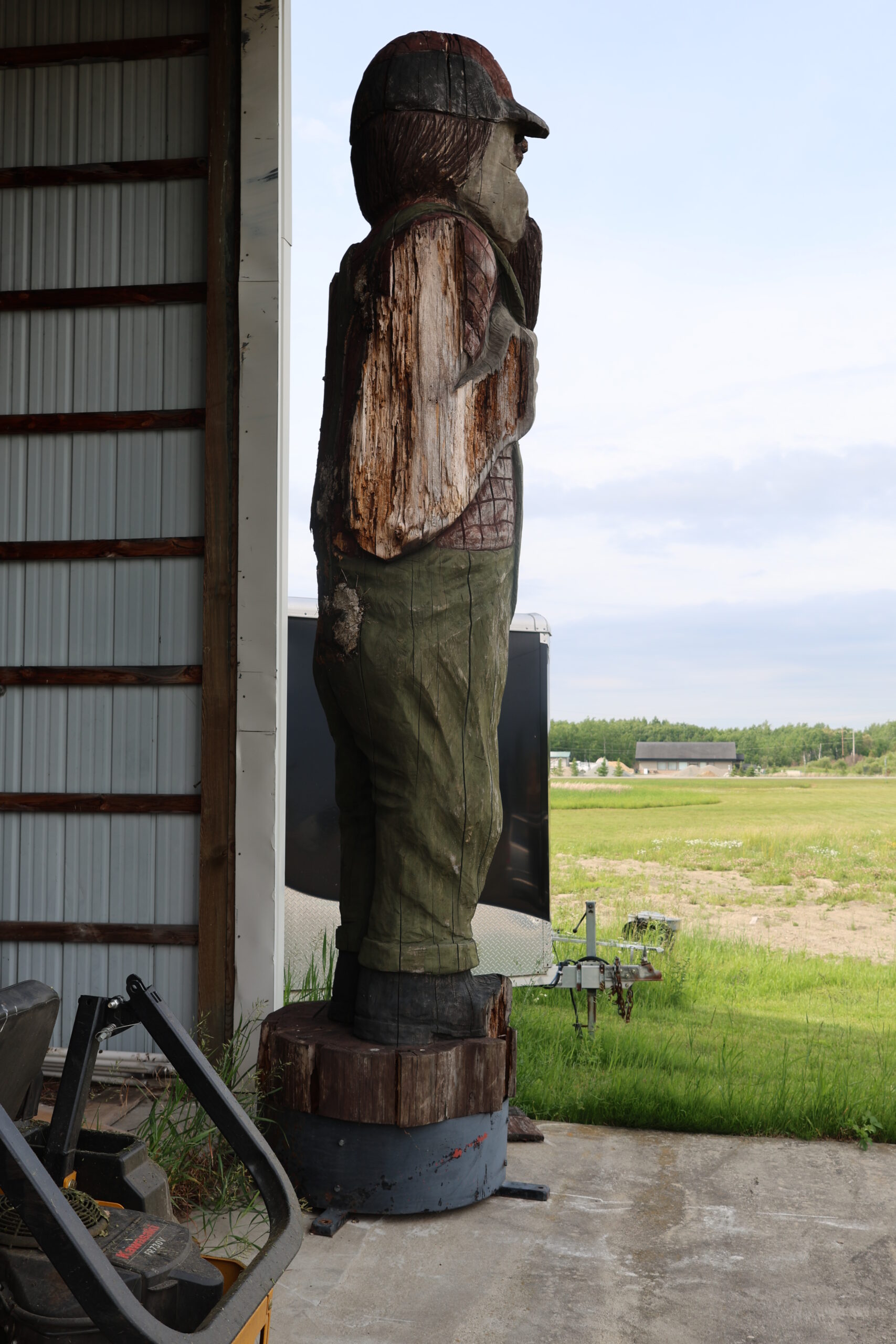
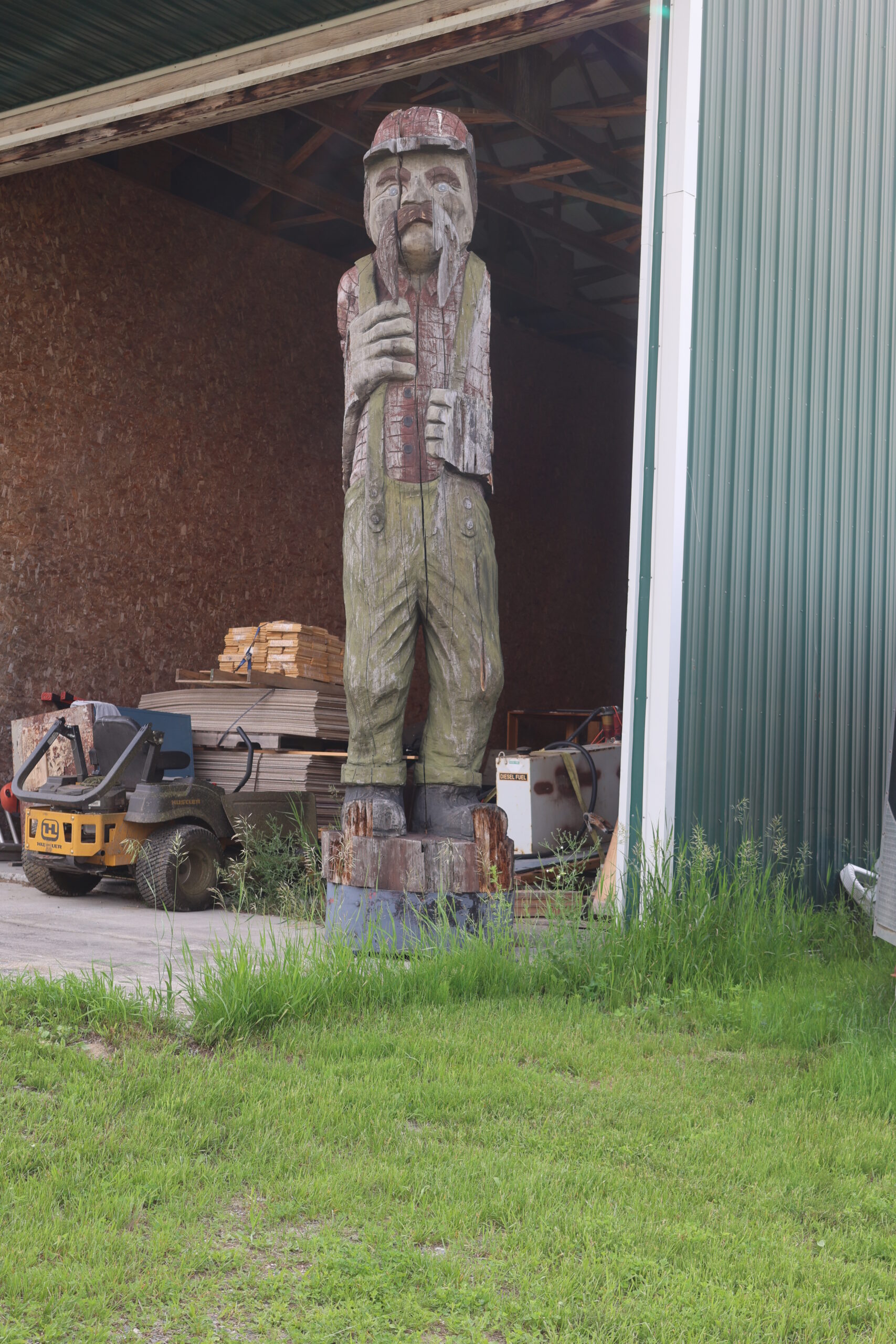
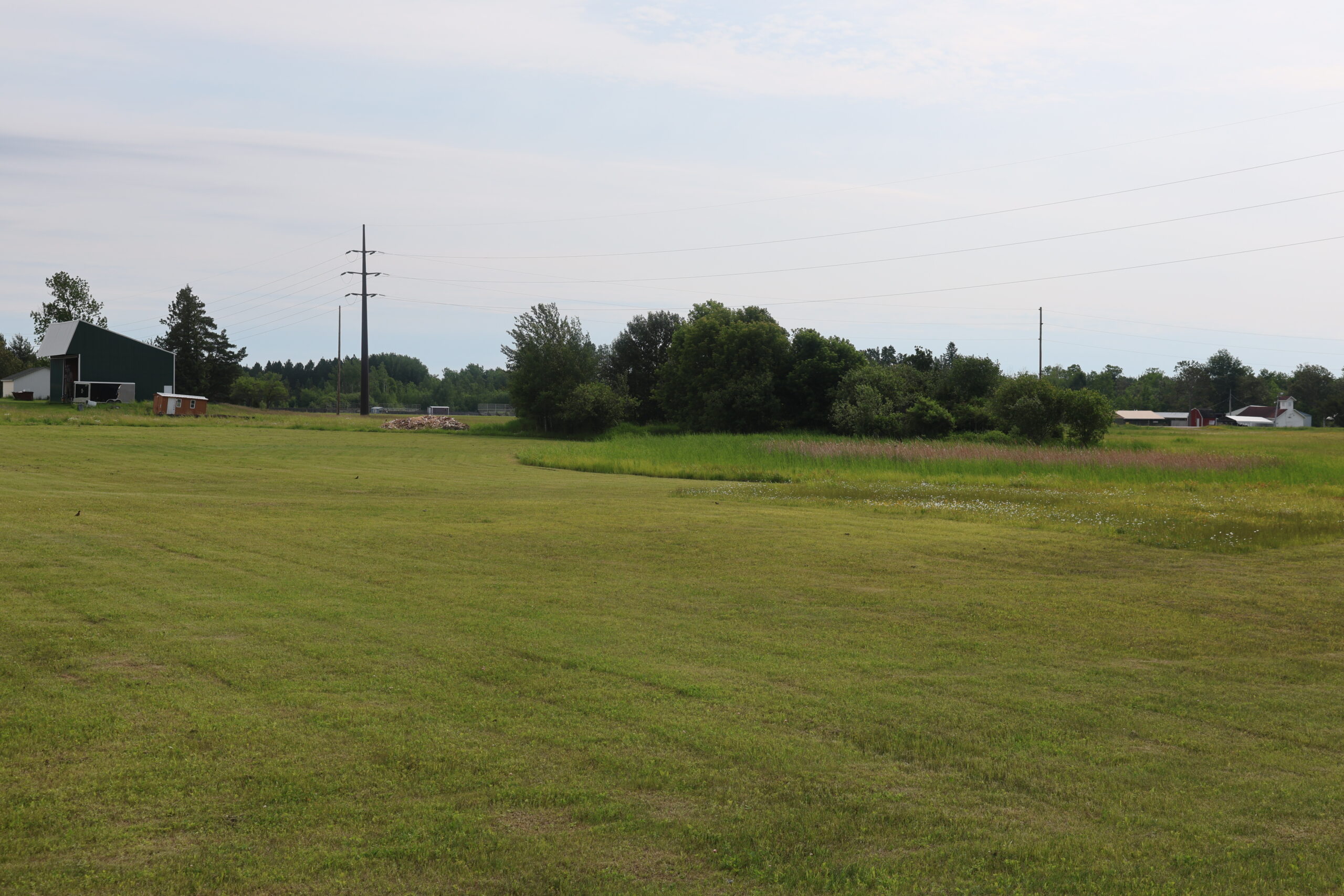
Today, the 1999 statue still exists across from the fairgrounds, weathered by time and Minnesota winters. The town eventually replaced it with the current fiberglass version on Main Street, a statue that keeps the Jackpine Savage tradition visible for visitors and families. It serves its purpose well, but it naturally doesn’t carry the same hand‑carved touch that Terry’s work did.
That is why the miniature carving owned by Bernie and Paulette Ziemba is so special. It is the last hand‑carved Jackpine Savage still in Littlefork that remains in beautiful condition, a true piece of Terry’s craftsmanship preserved exactly as he made it.
Terry passed away in 2016, but his work lives on in the statues he carved, the people he inspired, and the stories that continue to be told about the Jackpine Savage. Every time someone stops for a photo with the big chair, or remembers watching him carve in 1999, they’re remembering Terry too. (Click here for the obituary for Terry Boquist)
His legacy is carved into our town as surely as his chainsaw carved into that massive log.
2009–2010: The Transition to the Fiberglass Jackpine Savage
By 2009, the 1999 Jackpine Savage had weathered a decade of Minnesota winters. Cracks, fading paint, and years of exposure made it clear that the wooden statue was nearing the end of its life. That summer, Councilor Loren Lehman brought a proposal to the Littlefork City Council to replace the aging figure with something more durable. Some residents hoped for a statue that looked more like the real loggers who shaped the area’s early days, and City Administrator Mike Fairchild began exploring options.
Fairchild contacted a Wisconsin company known for creating long‑lasting fiberglass figures, and the idea of a more realistic, human‑looking lumberjack quickly gained traction. The community was invited to share thoughts and ideas, and the goal was to have a new statue ready for the 2010 Littlefork‑Big Falls All‑Class Reunion.
By February 2010, the Pioneer Press reported that the city was leaning toward hiring F.A.S.T. Corporation of Wisconsin, the same company behind Blackduck’s iconic duck statue. Their bid offered a 12‑foot fiberglass lumberjack built for longevity at a cost of 19,836 dollars. Fairchild reached out to local clubs for donations to help offset the cost, and the council expected to finalize the decision in March. The statue would take 12 to 16 weeks to create, putting its arrival squarely in the summer of 2010.
This period marked the official transition from the hand‑carved wooden era of the Jackpine Savage to the durable fiberglass figure that stands on Main Street today. A statue shaped not by chainsaws, but by community conversation, careful planning, and a desire to preserve a Littlefork tradition for generations to come.




📸 A Rare Chance to See Him Up Close
Before this story ends, there’s one more piece of Littlefork magic to share.
Bernie and Paulette Ziemba have graciously agreed to display their 1999 miniature Jackpine Savage inside Polkinghorne’s Hardware for one week only. This beautifully preserved carving has spent decades protected on their covered porch, and it is incredibly rare for him to leave home. But for this week, he’ll be right where the Jackpine Savage story began.
He’ll be available to view from June 29th through July 5th, 2026, before returning to his place of honor at the Ziemba home.
If you’ve ever wanted a photo with this historic treasure, or you just want to see a piece of Littlefork’s past up close, make sure to stop in while he’s visiting.
And while you’re at it, feel free to share your own photos in the comments: pictures with any of the Jackpine Savage statues, the big chair, or even old snapshots tucked away in a family album. Every photo helps preserve these memories and keeps the spirit of the Jackpine Savage alive for the next generation.
❤️ A Story About Us
The Jackpine Savage isn’t just a statue. He’s a timeline of Littlefork itself:
- 1979: the original, carved by Woodbutchery
- 1999: the second, carved by Terry Boquist
- 2010: the fiberglass replacement
He’s been raffled, repainted, replaced, and remembered. He’s stood through storms, celebrations, and generations of Littlefork families.
And now, thanks to the stories, photos, proposals, and memories shared by people like Paulette, Bernie, Mike Polkinghorne, and so many others, his history is finally being preserved.
Not just as a statue. But as a legend.
A legend that belongs to all of us.
Honoring the hands that shaped our history,
Preston Hoy, Littlefork Live News
One response to “The Legend of the Jackpine Savage: A Littlefork Story Through Three Generations”
-
Just figured out how to turn comments on for my posts here! If you have a memory you would love to share, please feel free to post it here!
Preston Hoy
Littlefork Live News

Leave a Reply